Storm Damage Siding Repair in Cumberland County County, ME
From storm damage on a farmhouse to a full re-side in a new subdivision, one call connects you with a licensed, insured independent siding pro who covers Cumberland County.
- 24/7 county-wide dispatch
- Free, no-obligation call
- Written quotes before work
- Licensed & insured independent pros
Talk to a real dispatcher now. Free to call, no obligation, and we route you to a licensed and insured independent local pro.
Tap to Call +1-844-782-0929Siding Help That Reaches Every Corner of Cumberland County
Dominguez Construction Siding is a free referral service that connects property owners across Cumberland County with independent local siding contractors. We do not install or repair siding ourselves. We pick up around the clock, find out what is happening with your siding, and connect you with a licensed, insured independent pro already working in your corner of the county.
Covering a whole county is where a referral line really pays off. A contractor based in the county seat may not drive forty minutes for a small repair, while a crew working the outer townships might be ten minutes from your door. We match the job and the location so you are not left working through a phone list.
The housing stock in Cumberland County varies a lot. There are older farmhouses with painted clapboard, small-town houses wearing aluminum, manufactured homes in vertical vinyl, and new builds in fiber cement or engineered lap. Barns, workshops, and outbuildings clad in metal or T1-11 panels are frequent calls as well.
Permit requirements can vary between incorporated towns and unincorporated areas. A good contractor will know which building office covers your address and will say early on if a permit applies.
On the call, share your address and the closest town, plus your siding type and whether water is getting inside. Rural addresses can be tricky to map, and those details help us find the independent pro who is actually closest to you in Cumberland County.
Properties out in the county often come with outbuildings, long drives, and walls facing open land, so they take more wind than tucked-in town lots. Local contractors know to check nailing and wind ratings on exposed walls and to plan deliveries around gravel drives and soft ground.
Siding Work the Pros in Our Network Handle Every Day
Nearly every siding call we route lands in one of six categories. Here is what each one involves, what a good contractor checks, and what you should expect before anyone hands you a number.
Emergency and Storm Damage Siding Response
When a wind event peels a run of vinyl off the gable or a falling limb punches through a wall, the clock starts. House wrap was never meant to be the finished surface, and raw OSB sheathing soaks up water fast once it is exposed. That is why storm calls get routed first.
The first visit is about stopping water, not selling a remodel. A competent pro will secure loose panels, tape or replace torn wrap, cover open sheathing with temporary sheeting, and photograph every elevation before anything is touched. Those photos matter later if you file an insurance claim.
When a limb is still resting against the house or the meter base took a hit, keep your distance and call the power company first. Siding contractors work around service masts and meters, but they do not touch live electrical equipment. Once everything is safe, most contractors can tarp, sheet, and button up the wall that same day.
- Short-term weather protection over torn wrap and open sheathing
- Re-securing vinyl panels that unlocked from the course below
- Hail impact mapping on vinyl, aluminum, and painted fiber cement
- Dated photo documentation you can hand to your adjuster
Siding Repair for Cracks, Rot, Warping, and Loose Panels
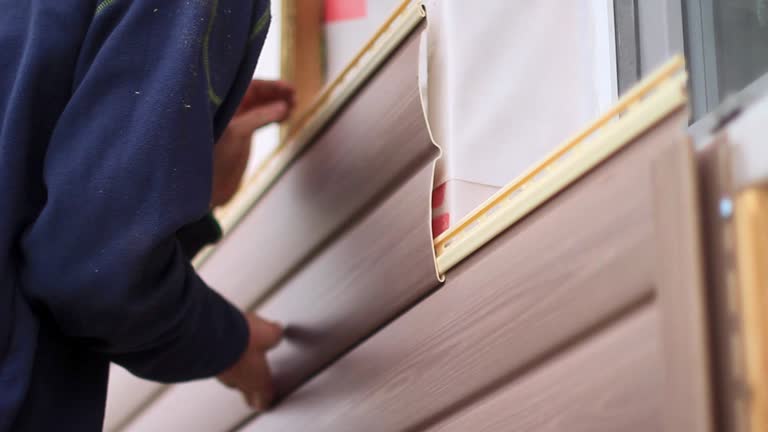
Plenty of siding problems never call for a full tear-off. A panel split by a mower stone, a melted strip beside the barbecue, or one punky clapboard below a sill is often a half-day repair. The skill is in the details: unlocking vinyl with a zip tool without kinking the courses above, sourcing a profile that actually matches, and finding out why the damage happened in the first place.
Rot is the problem that catches most owners off guard. Soft wood at the bottom of a window usually traces back to missing head flashing or a failed sill pan, not the siding itself. A contractor worth your time will probe the sheathing, check it with a moisture meter, and correct the water path before the wall gets closed.
Matching is the other half of a good repair. Vinyl fades a shade or two in direct sun, so a brand-new panel from the same product line can still look off on a south wall. Seasoned repair contractors measure the reveal, profile, and butt height, carry a sample to the supplier, and if nothing matches, borrow a panel from a hidden spot behind a deck or bush.
- Single-panel swaps and partial-wall repairs
- Rotted clapboard, trim, and sheathing replacement
- Melted or heat-warped vinyl near grills and reflective windows
- Woodpecker damage, impact cracks, and critter entry gaps
Residential Siding Installation and Full Replacement
Re-siding a house is a major decision, and installation quality matters more than whatever logo is on the carton. Siding warranties hinge on the manufacturer's installation instructions, which means shortcuts can cancel your coverage before the dumpster leaves.
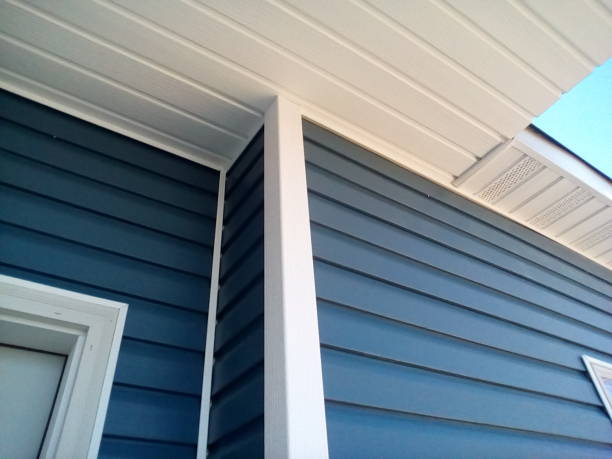
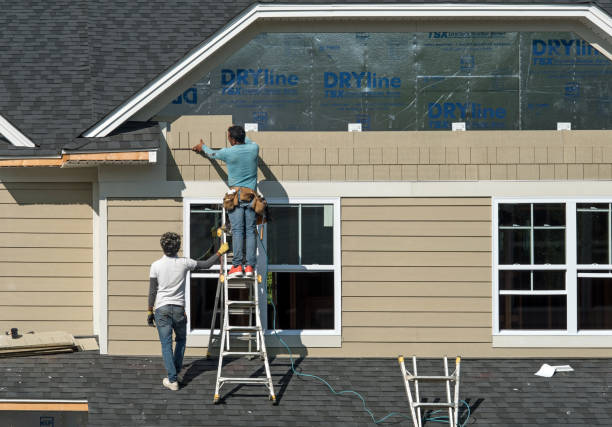
On a proper replacement, the old cladding comes off down to the sheathing so the wall can be inspected. Soft spots get cut out and replaced, a weather-resistant barrier goes on shingle-style with taped seams, windows and doors get flashed in the right order, and a level starter line is snapped before the first course goes up. Corner posts, J-channel, and trim are set plumb so every course lines up with window heads instead of wandering.
Ask how the old siding will be removed and what happens to it. On homes built before 1978, any painted wood or trim that gets disturbed may contain lead, and contractors who work on those houses should follow lead-safe work practices with plastic sheeting, HEPA cleanup, and proper disposal. If your home is that age and the bid is silent on it, raise the question.
- Full tear-off, haul-away, and sheathing repairs
- New weather barrier or rainscreen behind the cladding
- Insulated vinyl and rigid foam upgrades for energy savings
- Profile and color guidance, from Dutch lap to board-and-batten
Siding for Commercial, Rental, and Multi-Family Buildings
Apartment buildings, retail strips, offices, and HOA communities have different needs than a single home. Crews have to work around occupants, stage lifts and scaffolding safely, and keep the finish consistent across many units. Most property managers want a written scope, a phased timeline, and certificates of liability and workers comp before mobilization.
Commercial callers frequently need someone who can handle one storm-hit building now and a phased re-side of the whole property later. We route those calls to independent contractors who have the equipment and coverage for that size of job.
Commercial walls can come with added requirements, like fire-rated sheathing on some occupancies or tighter fastener spacing in high-wind areas. A contractor set up for commercial work will review the plans or the current wall build-up before pricing it, instead of treating it like a home.
- HOA and multi-family phased re-siding
- Storefront and office building cladding repair
- Fire-rated and code-specific assemblies where required
- Tenant-friendly scheduling and daily cleanup
Fiber Cement, Natural Wood, and Engineered Siding
Vinyl may be the most common request, yet many homes wear heavier materials. Fiber cement plank is dense, fire-resistant, and holds paint well, but it has to be cut with dust control because it contains crystalline silica, and it needs proper clearances above roofs and grade. Butt joints need flashing behind them, and nails go in flush, never overdriven.
Cedar and other natural wood siding look beautiful and last for decades when they are back-primed, fastened with stainless or hot-dipped galvanized nails, and installed over a drainage gap. Bargain nails are behind those dark streaks on neglected wood walls. Engineered wood lap splits the difference on cost and weight, as long as cut ends are sealed and the bottom course stays clear of soil and mulch.
Metal siding is coming back on modern farmhouse and contemporary designs, and older homes still carry plenty of original aluminum. Dented aluminum can sometimes be swapped panel by panel if the profile is still available, and steel lap or board-and-batten is sold in factory finishes that hold color for a long time. Either way, the pro should use fasteners compatible with the metal to avoid corrosion.
- Fiber cement lap, panel, and shingle installation and repair
- Cedar clapboard, shiplap, tongue-and-groove, and shake
- Engineered wood lap and trim systems
- Aluminum and steel siding repair for older houses
Trim, Soffit, Fascia, Flashing, and Siding Inspections
The cladding is only as good as the details around it. Most wall leaks we hear about begin at a missing kick-out flashing at a roof-to-wall joint, a split caulk line at a window, or a soffit that lets driven rain behind the cladding. Those are cheap to fix early and expensive to fix late.
Plenty of callers just want a trained set of eyes on the house before closing on it, ahead of storm season, or after a big blow. A siding inspection usually covers fastening, clearances, flashing, caulk, signs of moisture behind the wall, and whether the material is near the end of its service life.
A thorough inspection ends with a written summary and photos, not just a verbal opinion on the driveway. That write-up helps whether you are negotiating a purchase, budgeting for next year, or recording condition ahead of storm season.
- Kick-out flashing, drip cap, and Z-flashing installation
- Soffit replacement and aluminum fascia wrapping
- Pre-purchase, post-storm, and routine inspections
- Moisture meter and thermal camera checks on suspect walls
Why Siding Fails and What the Right Contractor Looks For
After years of routing siding calls in Cumberland County, the same few failures come up over and over. None are mysterious once you know what to look for.
Vinyl that was nailed down hard. Vinyl moves a lot with temperature. It is meant to hang loose, with nails centered in the slots and room left at each end to move. Pin it tight and you get rippled, wavy panels the first warm afternoon.
No kick-out flashing. Where a roof edge dies into a sidewall, water runs down the step flashing and needs a small diverter to throw it into the gutter. Skip it and the water goes behind the cladding, and the sheathing under those corners can rot out in a few seasons.
Too close to the ground. When siding meets dirt, mulch, or a slab, it pulls in moisture and draws bugs. Manufacturers call for a clearance above grade and above roof surfaces, and fiber cement in particular is unforgiving here.
Sealant used where flashing belongs. Caulk is a secondary seal, not a water management system. When a leak returns after each fresh bead of caulk, a missing piece of flashing is nearly always the cause.
A missing or reverse-lapped weather barrier. House wrap has to be lapped like shingles, upper sheets over lower ones, so water running down the wall stays on the outside. Backward laps and open tears steer water right into the sheathing, and plenty of older houses have no barrier behind the cladding at all.
Nails that corrode or stain. Plain steel nails rust, stain the face of wood siding, and lose holding power over time. Wood and fiber cement call for hot-dipped galvanized or stainless nails, and homes near salt water belong on stainless.
Green streaks do not always mean rot. Green or black streaks on shaded walls are usually surface mildew or algae that a gentle wash with a siding-safe cleaner will remove. Rot is different: the material feels soft, sounds hollow, or crumbles when probed. A contractor can tell them apart quickly, which can save you from paying for an unnecessary repair.
A word on timing. Planned siding projects pile up in spring and fall, while storm season brings sudden waves of emergency calls. If your project can wait, booking an estimate a few weeks ahead of those rushes usually gets you more scheduling options.
Repair or Replace? A Straight Answer Before You Call
Cumberland County homeowners ask this more than anything else, and the real answer depends on how much of the wall is involved and what caused the damage.
Signs a repair is probably enough
The damage stays on one elevation or a handful of panels, the remaining siding is solid and well fastened, the sheathing is dry, and a decent match can be found. Storm blow-offs, impact cracks, grill melt, and isolated rot from a single missing flashing usually fall here.
When replacement starts to win
Multiple walls are cracked, faded, or brittle, panels keep releasing because the original job was poor, soft sheathing appears in several places, or the material is too old to match. Repairing a failing wall again and again often costs more over a few years than replacing it once and doing it right.
What affects what you will pay
Every estimate is built on a handful of variables. Material is the obvious one: vinyl generally costs the least, engineered wood and fiber cement sit in the middle, and natural wood and premium metal run higher. Next come wall size and height, the number of windows and corners that need trim, tear-off and disposal, and how much sheathing has to be replaced once the wall is exposed.
Access plays a part as well. A tall wall above a slope needs scaffolding or a lift, and that labor is built into the price. Hidden rot is the wild card, so a careful contractor will explain how unexpected sheathing repairs will be priced before the tear-off begins.
From Your Call to a Finished Wall in Four Steps
We keep the process simple because nobody wants to chase contractors. A single call gets your job in front of an independent local pro who works on siding in Cumberland County.
Call the Dispatch Line
Tell the dispatcher what you are seeing: missing panels, a soft spot, a leak inside, or a full re-side you are planning. Photos help if you can take them. Lines are answered 24/7.
Get Matched With a Local Pro
Your call is passed to a licensed and insured independent contractor who covers your neighborhood and does your kind of work. Emergency calls are flagged for the fastest available response.
On-Site Assessment and Written Quote
The contractor inspects the wall, checks for moisture behind the siding, and explains what failed and why. You get a written quote before any work begins, so there are no surprises.
Work Completed and Final Walkthrough
After you sign off, the job is completed to manufacturer specs, the mess is cleared, and you walk the result with the contractor. Ask for the warranty paperwork and before-and-after photos to keep on file.
Why Cumberland County homeowners Start With One Call to Us
Finding a siding contractor on your own usually means leaving voicemails, waiting days for callbacks, and comparing bids that do not describe the same job. We take that legwork off your plate.
Licensed and Insured Independent Pros
Calls go to independent local contractors who state they carry the licensing and insurance your area requires. Ask for the insurance certificate before work begins; reputable contractors hand it over without fuss.
Upfront, Written Pricing
Contractors in our network put the price in writing after inspecting the wall, never as a blind phone guess. You see the scope, materials, and full cost before a single panel comes off.
Quick Response From Local Pros
Because calls are matched to contractors who already work around Cumberland County, travel time stays short. Storm and active-leak calls are prioritized day or night.
Free, No-Obligation Referral
Calling the line costs nothing, and you are never obligated to hire anyone. If the estimate does not feel right, you are free to pass.
Every caller gets the same treatment, whether the job is one cracked panel or an entire building. Small repairs are often the hardest to get scheduled on your own, and they are a big part of what we route every day.
We also keep the conversation practical. If your problem sounds like a gutter, roofing, or window issue rather than siding, the dispatcher will tell you so instead of sending a siding crew out for nothing.
One honest note: we are a referral service, not the contractor. The pros you are connected with run independent businesses, so spend a minute confirming their license, insurance, and permits for the work.
Signs your siding needs a professional look
- Wavy or bowed panels, or bottom edges lifting off the wall
- Cracks, holes, or chips that show house wrap or wood underneath
- Soft, spongy, or crumbling spots near windows, doors, or the foundation
- Bubbling paint or water marks on the inside face of an outside wall
- Mildew or algae that comes right back after washing
- Rust runs under nails or dark streaks on wood boards
- Open gaps at corners, channels, or trim where light or bugs get through
- Energy bills climbing for no obvious reason
Any one of these on its own may be minor. Two or three at once, particularly around windows or roof edges, usually point to water getting behind the wall. That is when to have an independent contractor take a closer look, before a small fix becomes a full wall repair.
Common siding materials at a glance
Vinyl
The most common choice for its low cost and minimal upkeep. Heavier-gauge panels stand up better to wind and impact, and insulated versions add a foam backing for rigidity and comfort. It must be hung loose to move with temperature.
Fiber Cement Plank
Dense, fire-resistant, unappealing to insects, and excellent with paint. It calls for dust-controlled cutting, joint flashing, and careful clearances above soil and roof lines.
Cedar and Real Wood
Classic looks and a long life when maintained. Boards should be back-primed, fastened with stainless or galvanized nails, and repainted or restained on schedule.
Engineered Wood
Lighter than fiber cement with a wood-grain look and moderate cost. Cut edges must be sealed and the bottom course kept clear of soil, mulch, and standing water.
Follow-Up Notes From Cumberland County Callers
These comments come from callers across Cumberland County, used with permission and edited for length.
We are a good drive from town and figured nobody would come out for a few panels. The pro I was connected with lives about fifteen minutes away, came out the next day, and replaced the hail-cracked vinyl on our north wall.
Earl W.Cumberland County hail damage repairOur old farmhouse has wood clapboard that had not been painted in years. The contractor replaced the worst boards, back-primed every new piece, and used stainless nails so we would not get streaks. They also caught a missing kick-out flashing over the porch roof.
Linda S.Cumberland County wood siding repairHigh wind pulled a T1-11 panel off my workshop. I called at dawn and had help there before noon to cover it, and they returned with new panels painted to match.
Brandon K.Cumberland County outbuilding sidingOur new-build house had fiber cement cracking at the corners. The pro pointed out overdriven nails and incorrect gaps at the trim and wrote up a report for our builder.
Priya and Sam N.Cumberland County fiber cement inspectionOur church fellowship hall had vinyl peeling off the gable after a windstorm. The contractor worked around our events, used a lift for the high section, and finished in two days.
Pastor Jim D.Cumberland County commercial siding repairLittle town, little job, fast response. Two panels got dented by a ladder, and the contractor got an exact color match by taking a panel from behind the AC condenser.
Rosa M.Cumberland County vinyl repairStorm Damage Siding Repair Questions From Across Cumberland County
How fast can a Storm Damage Siding Repair technician arrive in Cumberland County?
Arrival time depends on your location in the county and how swamped contractors are after bad weather. Emergencies are prioritized, and many get a contractor that day or the next morning. Planned-work estimates are usually booked within a few days.
Do contractors travel to rural parts of Cumberland County?
Yes, and it is a big reason people use this line. We find independent contractors already working close to your property, which keeps rural homes from being skipped. Some may charge a trip fee for very remote locations, and they should tell you before they come out.
Do you provide upfront pricing?
The independent contractors you are connected with provide written quotes after inspecting the siding. That keeps the price tied to the actual damage instead of a guess. No work should begin until you sign off on the estimate.
What emergency services are available?
Emergency service covers sheeting over exposed walls after storms, fastening loose panels, dealing with tree or vehicle hits, and stopping interior leaks. Lasting repairs come after materials are matched.
Can you help with barns, shops, and outbuildings?
Yes. Many county calls involve metal, T1-11, board-and-batten, or vinyl on outbuildings. We send those to independent pros who handle farm and accessory buildings in addition to houses.
Is the call really free?
Yes. There is no fee to call and no obligation to hire. Dominguez Construction Siding is a referral service, and the contractor quotes you directly.
Do I need a permit for siding in Cumberland County?
That depends on whether your property is in a town or unincorporated area, and how big the project is. Whole-house replacements are more likely to require one. Your contractor should check and handle it.
Will insurance cover storm damage to my siding?
Wind and hail damage is frequently covered, though every policy is different. Call your insurer first, then have the contractor document the damage with photos and a written description. Good documentation makes the claim go smoother.
What should I ask a contractor before hiring them?
Request an up-to-date insurance certificate, any license required where you live, a written scope listing flashing and house wrap, and who pulls the permit. Also confirm they install to the manufacturer's instructions so your warranty holds.
How long does a siding repair usually take?
Small repairs often take a few hours once matching material is on hand. Larger sections with sheathing replacement may take a day or two, and full replacements can take a week or more. Weather and material availability can change the schedule.
Where We Route Siding Calls in Cumberland County
Coverage includes commercial buildings, rental homes, churches, schools, and HOA communities in Cumberland County. Managers and out-of-area owners are welcome to call for the property.
Every town, village, and unincorporated area in Cumberland County is covered. From the county seat to small rural communities and large acreage properties, the dispatcher will find an independent pro close to you.
The cities and zip codes listed below are part of the service area. If your town is not listed, call anyway, because coverage often reaches beyond the list.
- The county seat and surrounding neighborhoods
- Villages and small towns
- Unincorporated and rural properties
- HOA communities and new subdivisions
- Farms, barns, and outbuildings
- Multi-family and commercial buildings
Siding Damage Anywhere in Cumberland County? Call Now
A live dispatcher answers 24/7. Free to call, no obligation, and you will be connected with a licensed and insured independent contractor near you.
Call +1-844-782-0929 Now